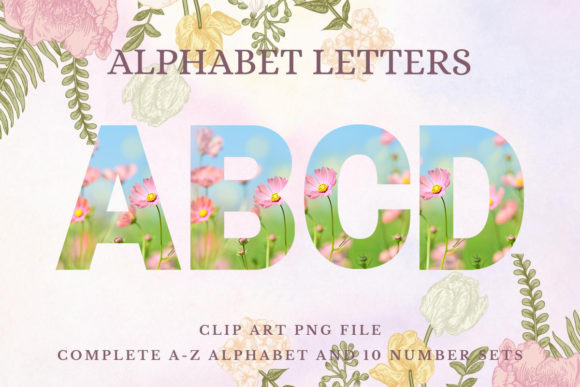
Choosing a Sweet Floral Alphabet Sublimation Font for Your Projects
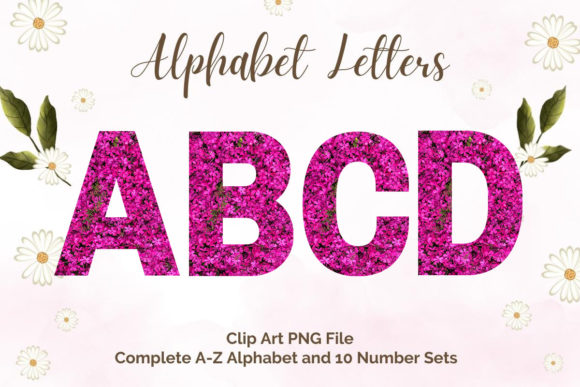
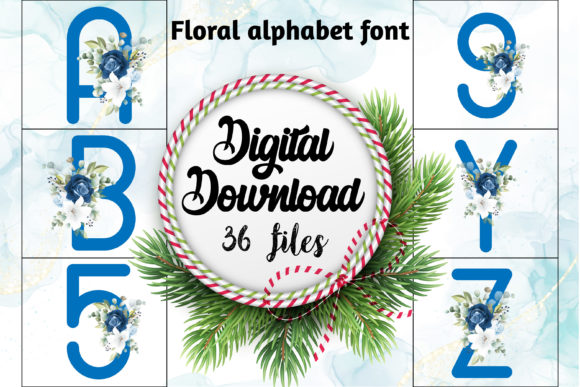
For crafters, designers, and small business owners working with sublimation, the choice of decorative alphabets is a foundational design decision. The Sweet Floral Alphabet Sublimation Font represents a specific category within this space: it is a set of individual PNG clipart letters, each adorned with floral motifs, designed explicitly for heat-transfer applications and printable crafts. Unlike a standard digital font file that you install and type with, this product is a collection of 26 pre-rendered, high-resolution image files for each uppercase letter and numbers. This fundamental difference in format shapes its use, strengths, and limitations compared to other typographic resources.
What Distinguishes a Sublimation Alphabet Set from a Traditional Font
The core distinction lies in workflow and flexibility. A traditional font file, whether an SVG for cutting machines or a TTF/OTF for software, allows for dynamic editing. You can type any word, adjust spacing, change size, and often edit colors within your design program. The Sweet Floral Alphabet Sublimation Font, as a PNG set, operates differently. Each letter is a fixed, beautifully illustrated asset. You arrange them manually in your graphic software, like placing individual stickers. This offers less typographic flexibility but provides a guaranteed, consistent aesthetic where each character is a complete floral artwork. The intricate details, such as petals and leaves integrated into the letterforms, are preserved exactly as designed, which can be harder to achieve with some editable floral fonts.
Primary Strengths and Ideal Use Cases
The strengths of this alphabet set are most apparent in specific applications. Its 300 DPI resolution and transparent background make it exceptionally suited for physical outputs where clarity is paramount.
- Sublimation Products: This is the prime use case. When printed onto sublimation paper and transferred to mugs, tiles, polyester apparel, or coasters, the high-resolution PNGs ensure the floral details remain sharp and vibrant without pixilation. Compared to using a lower-resolution image of a typed word from a standard font, this can yield a cleaner final product on the substrate.
- Craft Projects and Invitations: For projects where a single, impactful word or name is the centerpiece—such a wedding invitation, a baby shower decoration, or a framed monogram—the set provides ready-made elegance. You are not designing a font; you are assembling pre-made artwork. This can save considerable time for those less proficient in advanced vector editing.
- Consistent Branding for Small Businesses: A small business specializing in floral-themed sublimated goods might use this exact alphabet set across product lines to establish a recognizable, cohesive look. Since the letters are fixed assets, the branding remains perfectly uniform, which can be a advantage over an employee typing with a font that might allow for inadvertent spacing or sizing variations.
The trade-off here is scalability for long-text projects. Creating a full paragraph with a PNG alphabet set is a laborious process of manually placing each letter, making it impractical for projects like booklet text or multi-line quotes. In those scenarios, an editable floral font you can type with would be the more efficient alternative.
Evaluating Format and Editing Limitations
A key decision factor is the “non-editable” nature of the files. The product description clearly states these are “finished files and are not for editing.” This means you cannot ungroup the floral elements from the letter shape, change the flower colors independently, or alter the stroke width in vector software. You receive the artwork as a composite image.
This limitation is significant when compared to an SVG floral alphabet, where letters might be built from separate layers for leaves and stems, allowing color customization. If your project requires matching the floral colors to a specific brand palette or seasonal theme, the fixed-color Sweet Floral Alphabet Sublimation Font may not fit. Conversely, this limitation is also a benefit: it guarantees design integrity and removes the need for complex editing skills. The product is ready to use immediately, offering a “what you see is what you get” reliability. For users who prefer a straightforward, assembly-style design process, this is a positive attribute.
Comparing with Other Decorative Typography Options
When exploring alternatives, it's useful to consider categories rather than specific competitor products. Your options generally fall into three camps: editable font files (TTF, OTF), vector asset sets (SVG), and image asset sets (PNG, JPG). The Sweet Floral Alphabet Sublimation Font falls squarely into the third category.
- Editable Font Files: A downloadable floral font you install on your computer offers maximum flexibility for text generation. It’s efficient for projects involving varied text lengths. However, the rendered output quality for sublimation depends heavily on the font's original vector quality and your software's rasterization settings. Some decorative fonts may not hold fine details as well when converted to a high-res PNG for printing.
- Vector SVG Sets: SVG letters offer a middle ground. They are often editable and scalable without quality loss, suitable for both sublimation and digital cutting machines like Cricut or Silhouette. They require software that handles vectors (like Illustrator or Inkscape). For a purely sublimation-focused project where you won't use a cutter, the SVG's primary advantage over a PNG may be its editability, not its output quality, since both can yield excellent 300 DPI prints.
- Image PNG Sets (like this product): As discussed, these provide fixed-design, high-resolution assets. Their best-fit situation is when the design is perfect as-is, the project uses short words or single initials, and the user's priority is a quick, reliable path to a printable file without editing steps.
The choice often hinges on your primary toolset and project goals. If you work predominantly in sublimation design software that excels at handling images (like many dedicated sublimation print platforms), a PNG set integrates seamlessly. If your workflow is centered in vector editing software for multi-purpose crafting, an SVG set might be more versatile.
Decision Factors: When This Alphabet Set Is the Right Fit
Choosing the Sweet Floral Alphabet Sublimation Font is likely the most straightforward path under these conditions:
- Your project centers on short text: names, single words, monograms, or dates.
- The integrated floral design exactly matches your aesthetic needs, and you do not require color changes to the floral elements.
- Your technical preference leans towards assembly-based design (placing pre-made elements) rather than typography-based design (typing and formatting text).
- Your end product is physical, like a sublimated mug or framed print, where the guaranteed 300 DPI resolution is a critical quality factor.
- You value time efficiency in the design stage over creative editability during the design stage.
When to Consider Another Option
This particular product may not be the best resource if your requirements include:
- Long-Text Projects: Creating a quote or a paragraph would be prohibitively time-consuming.
- Color Customization: You need to change the pink of the roses to a blue, for example, to match a client's request.
- Multi-Platform Crafting: You intend to use the same alphabet for sublimation and for vinyl cutting with a digital cutter. An SVG set would serve both purposes.
- Budget Constraints for Large Sets: While this set covers A-Z and numbers, some projects might require a full lowercase set or special characters. You would need to evaluate if a complementary lowercase floral PNG set exists or if a full font file would be more economical for a complete character set.
In these scenarios, searching for an “editable floral font” or a “vector floral alphabet SVG” would likely yield more suitable alternatives. The decision isn't about one product being superior; it's about matching the resource's format and constraints to your specific project pipeline and desired level of creative control.
Practical Integration into a Design Workflow
Implementing the Sweet Floral Alphabet Sublimation Font into a real-world project is intuitive. For example, designing a personalized sublimation tumbler for a gift involves downloading the PNG files, opening them in a program like Photoshop, Canva, or even the software that drives your sublimation printer. You would create a new canvas at the correct size for your tumbler wrap, then drag and drop the letters for “Sarah” onto the canvas, arranging them spaciously. Because each letter has a transparent background, they overlay cleanly. You might then add other PNG elements, like additional floral clipart, to complement the letters. The final composite image is then printed onto sublimation paper. The key advantage in this workflow is the absence of font rendering concerns; the letters are already optimized images.
Compare this to using an installed floral font in the same scenario. You would type “Sarah,” select the font, and then must ensure you export the text as a high-resolution image at 300 DPI. Sometimes, overly decorative fonts can appear slightly fuzzy at smaller sizes during this rasterization process. The PNG set bypasses that potential issue entirely. The trade-off, again, is that adjusting the spacing between “S” and “a” to get a perfect look requires manually moving the image files, not simply adjusting a font's kerning setting. For many crafters, this hands-on arrangement is a familiar and comfortable process.
Ultimately, resources like the Sweet Floral Alphabet Sublimation Font serve a distinct niche within the digital crafting ecosystem. They provide a blend of high-quality, art-ready assets and a constrained but streamlined workflow. Their value shines brightest when the project scope aligns with their format—short, impactful text destined for physical creation. By understanding that it is a collection of image assets, not a dynamic font, you can better evaluate its place against the broader spectrum of typographic tools. This clarity helps in selecting the right resource not just for a single project, but for your ongoing creative or commercial work, ensuring your chosen tools complement both your skills and your desired outcomes.